SOLD OUT. This edition was super popular and is now completely sold out. Be the first to hear about new artworks and get early access — sign up now and follow the artist.
In Chiron Duong’s work, past and present do not contrast, but merge. His photographs seamlessly fuse Vietnamese tradition with contemporary aesthetics, weaving visual narratives of cultural identity, grace, and sincerity.His visual…
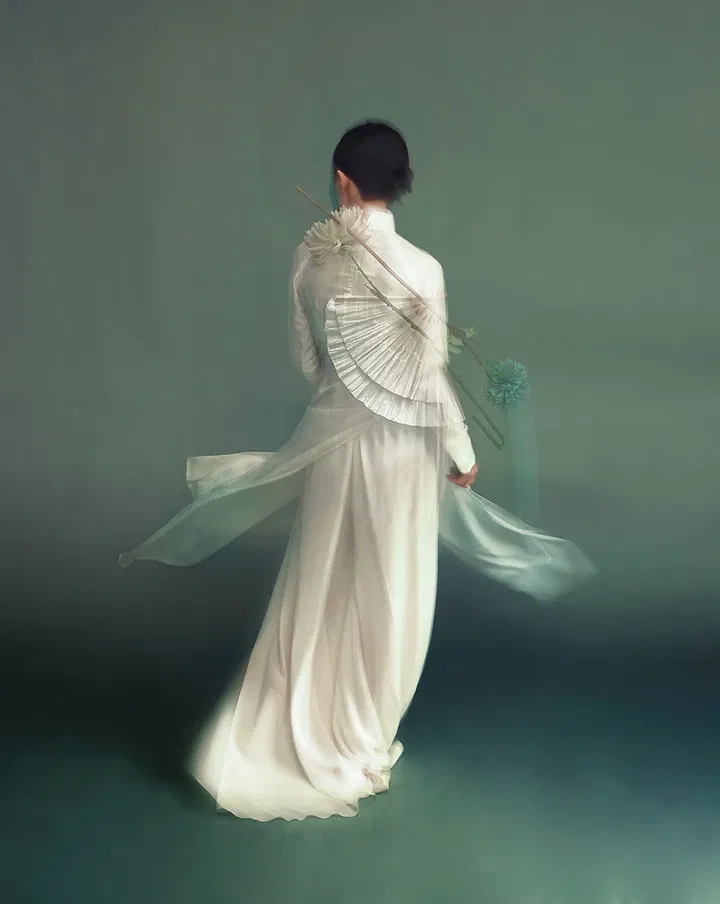
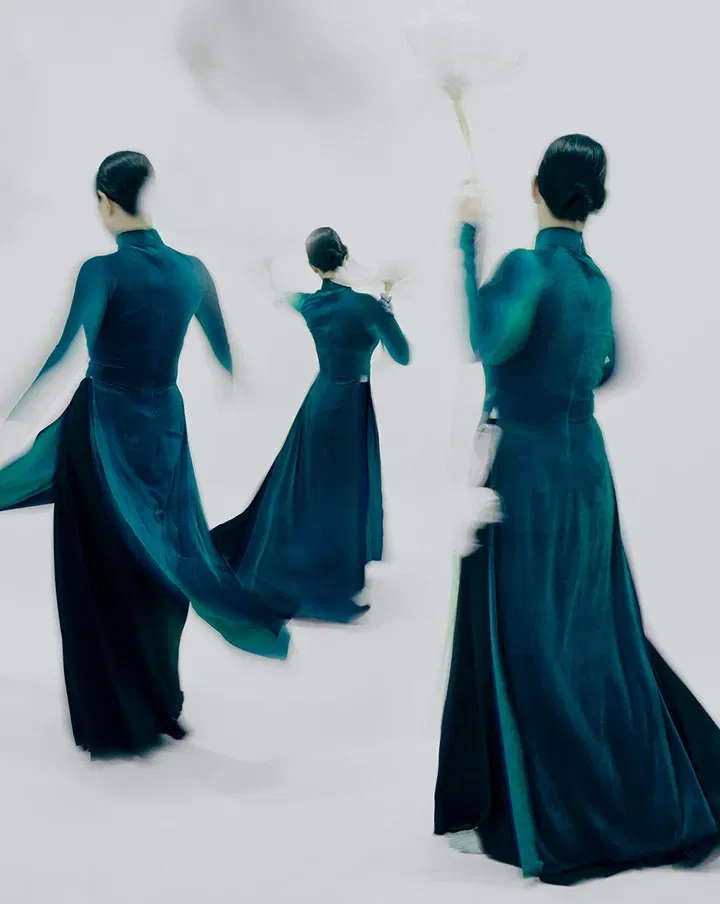
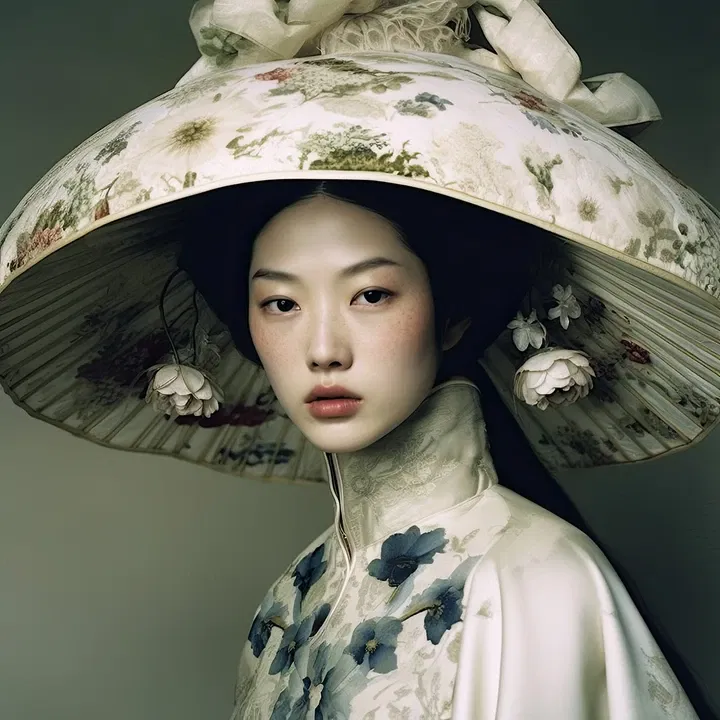
Chiron Duong’s Portraits of Áo Dài is a long-term visual project exploring Vietnam’s traditional dress as a symbol of female strength, dignity, and collective memory. Over the course of a year, daily portraits unfold into a finely composed body of work—a contemporary, personal reflection on cultural heritage. Trained as a landscape architect, Chiron Duong thinks in spaces, layers, and atmospheres— seamlessly blending the social with the aesthetic, the enduring with the ephemeral.
BACKGROUND INFORMATION
In Chiron Duong’s work, past and present do not contrast, but merge. His photographs seamlessly fuse Vietnamese tradition with contemporary aesthetics, weaving visual narratives of cultural identity, grace, and sincerity.
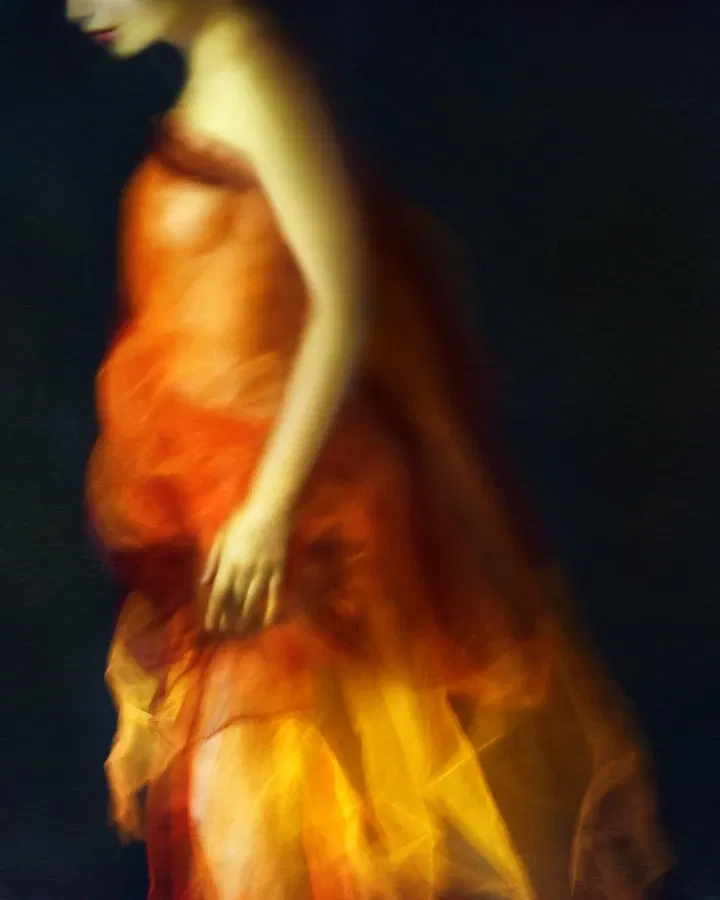
His visual language is unmistakable: choreographed movement, floating fabrics illuminated by light—infused with historical, personal, and political resonance. What interests Duong is not merely what is visible, but what glimmers beneath the surface—captured through a finely tuned sensitivity to nuance, transitions, and meanings that do not immediately reveal themselves. His photographs are not depictions, but spaces—where memory, beauty, and reflection meet.
In his series Portraits of Portraits of Áo Dài, Duong turns his gaze to the traditional Vietnamese garment, the Áo Dài—not simply as fabric, but as symbol. In his work, it becomes an emblem of feminine strength, cultural dignity, and collective remembrance. The project emerged from an exploration of Vietnamese culture as an intrinsic part of his photographic identity. The response unfolds over the course of 365 days—as a daily photographic practice. The subjects of the series are not professional models, but friends, family members, and people from his immediate surroundings. Their gestures, postures, and movements are not poses—they are expressions of memory, of character. His images depict the Áo Dài in motion and in light, in dialogue with floral motifs—a visual tapestry of identity, history, and contemporary presence; an almost ethereal convergence of Eastern and Western cultural influences.
Movement lies at the heart of Duong’s photography—inspired by the everyday ways the Áo Dài is worn and lived. Motifs from nature—flowers, light—flow through his compositions as quiet signs of hope, of vitality, and of the poetic ease that underlies his visual language.
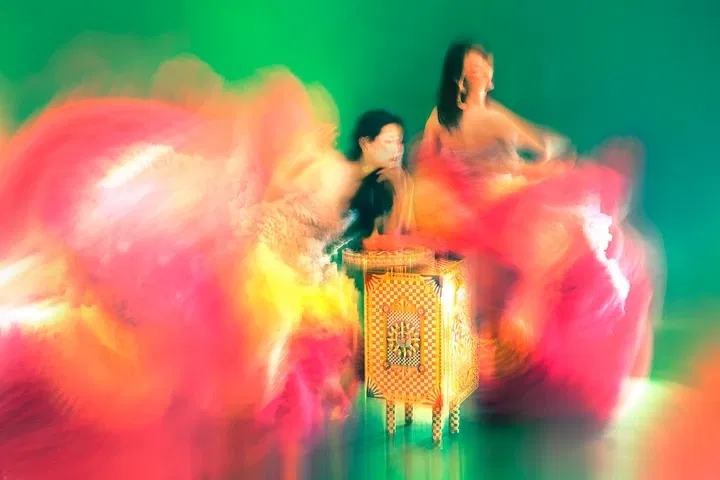
In The Brilliant Glass Panes, too, light becomes the central compositional element. The series began with the observation of stained-glass windows in European architecture—and the desire to translate the emotional intensity of these colors into photographic form. Duong describes them as “the dance of the gods” in his palm—a moment suspended between lightness and depth, fleeting yet arresting. The rupture between brilliance and its impermanence becomes the subject: an image of the fragile connection between dream and reality. Between fashion, interior architecture, and photography, a visual language emerges that understands radiance as metaphor—for individuality, existence, and the longing for a space beyond the everyday.
Duong’s artistic approach is shaped by an interdisciplinary perspective. Trained as a landscape architect, he thinks in layers, spaces, and atmospheres. His work bridges the social and the aesthetic, architecture and the human body, remembrance and vision, self-discovery and invention. His projects have received multiple accolades and been exhibited internationally—from PhotoVogue and the British Journal of Photography to The Independent Photographer, the Aesthetica Art Prize, and the International Photography Awards, with exhibitions ranging from Milan to Singapore. In Vietnam, Duong is regarded as a significant voice of a new generation—one that does not preserve tradition as nostalgia, but reimagines it visually.
What unites all of his work is a quiet sense of intention—and a deep trust in the power of images to make the invisible not only seen, but felt: to capture it, and yet let it go.
VITA
Chiron Duong is a Vietnamese fine art and fashion photographer whose work unfolds at the intersection of past and present, cultural heritage and contemporary aesthetics, Eastern and Western influences, collective memory and personal identity. At the core of his practice are the themes of hope, peace, and love – envisioned as a visual counter-narrative to anonymity and cultural alienation in modern life. His visual language is both poetic and conceptual; he approaches photography as a medium of emotional resonance, expressed through light, color, and movement in aesthetically rich, philosophically layered compositions.
INTERVIEW
Picasso once said, “You don’t make art, you find it.” Where do you find your art? I grew up surrounded by peaceful countryside and beautiful nature. Alongside this, I found comfort in literature and painting – even while navigating the tensions within my family. Into my art, I carry both the hopeful gaze of a child and the emotional emptiness that can come with adulthood. From an idea to its materialization: How do you approach your work? I start with objects and materials that are easily found around me and incorporate them into my work. I call them local materials and from there, I find ways to photograph these materials. As a landscape architect, my approach is to study Eastern materials, colors, and emotions to combine with Western photography techniques.
What is your favorite book? I’ve always been drawn to Haruki Murakami’s writing.
Which artist would you like to have coffee with and what would you discuss? Miyazaki Hayao – just to say thank you. He created one of my all-time favorite characters in his movie Porco Rosso.
How did you get into Art, specifically Photography? I’ve always had a bit of a talent for drawing and writing, and I think those interests naturally led me to photography. It allows me to explore the space between reality and dreams – and to express what I can’t put into words.
How much time and energy does one photograph require – from concept development to the final product? From concept to completion, it usually takes a few days. Who are the people in your surroundings that influence you? I’m inspired by graphic designers. I admire the creative dynamism in that field. Imagine you have a time machine. Where would you go? I don't think much about this. Maybe at this stage, I want to look more into the future and see what I will do. Other than art, what are you most passionate about? I like staying active and enjoy sports of all kinds. What are you working on right now? Besides personal photography projects, I founded an organization called ChiLab for community art activities.
LUMAS ART NEWS
Exclusive offers
Inspiring new releases
Personal invitations to Art Events
LUMAS protects your data. See our Privacy Policy for details.
ALMOST DONE ...
1. Open the confirmation mail.
2. Click on the confirmation link.
3. Your wishlist registration was successful!
4. Your wishlist has been saved!
We look forward to welcoming you soon to the world of LUMAS.
DIGITAL PREVIEW
SCAN THE QR CODE! (Safari IPHONE ONLY)
PREVIEW ON YOUR WALL
SCAN THE QR CODE! (Safari IPHONE ONLY)
90% of our customers order mounting or framing for a perfect gallery look.
Fully protected by our 30 day return policy.
Ready to Hang.
Elevates the artwork to true gallery quality.
Continue without mounting or framing?
* Rolled prints are final sale and cannot be returned or retrofitted with our frames




 EASTER ART WEEK


 About Chiron DuongIn Chiron Duong’s work, past and present do not contrast, but merge. His photographs seamlessly fuse Vietnamese tradition with contemporary aesthetics, weaving visual narratives of cultural identity, grace, and sincerity.His visual…