Melina Gerdts approaches landscape with the eye of an artist whose photographic vision is shaped by a profound sense of abstraction. Created at over 4,200 meters above sea level in the Bolivian Andes,
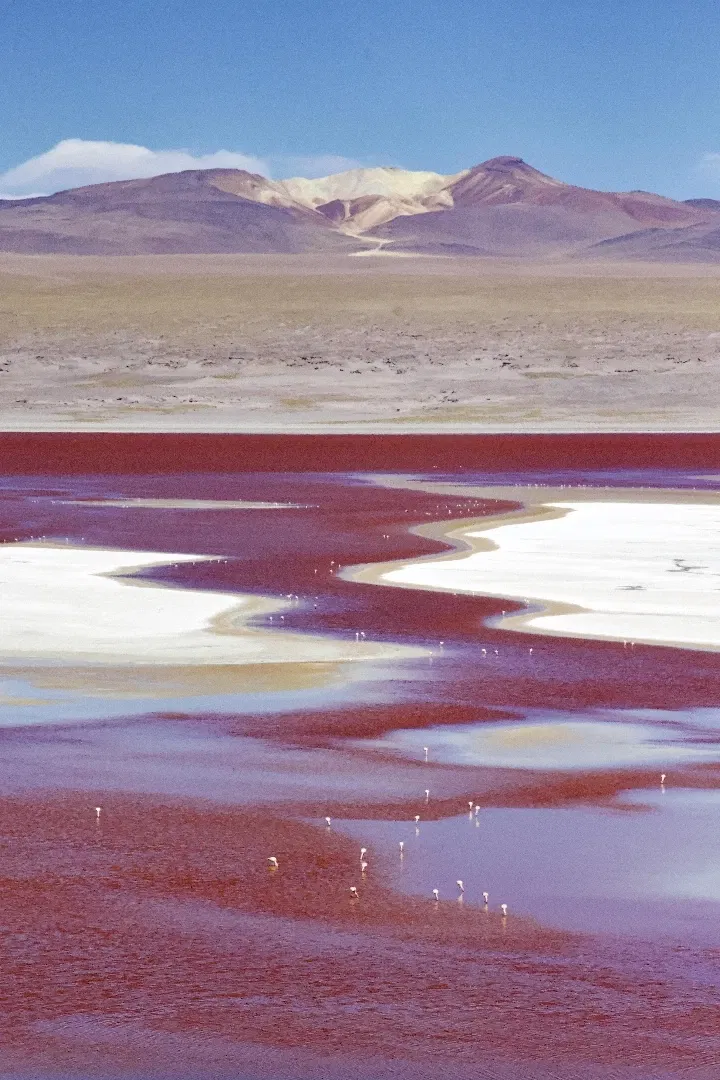
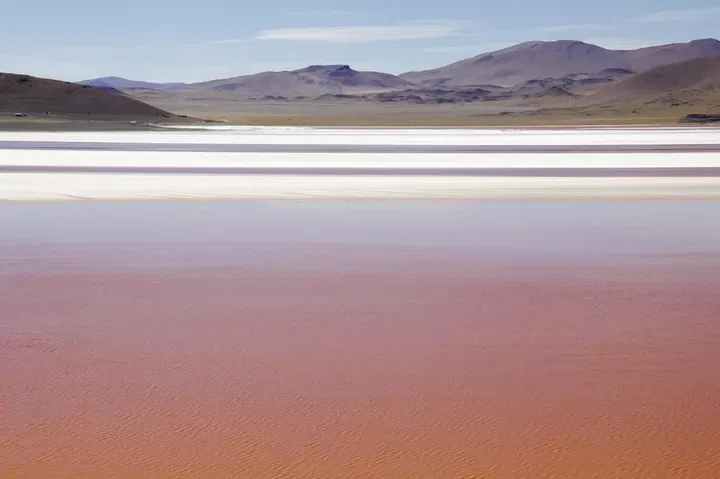
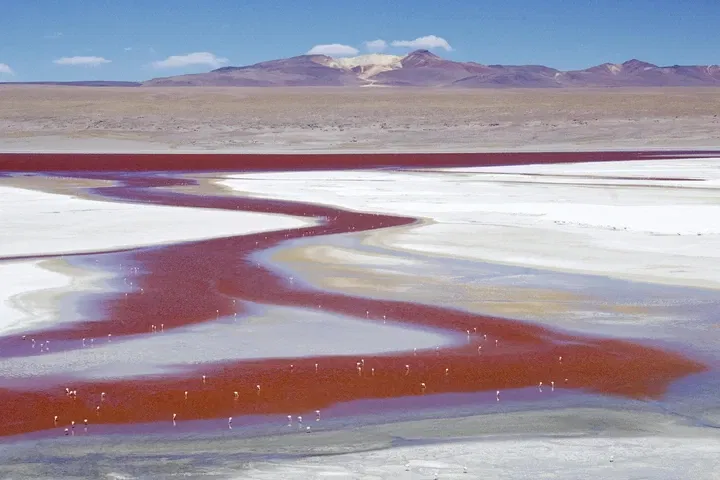
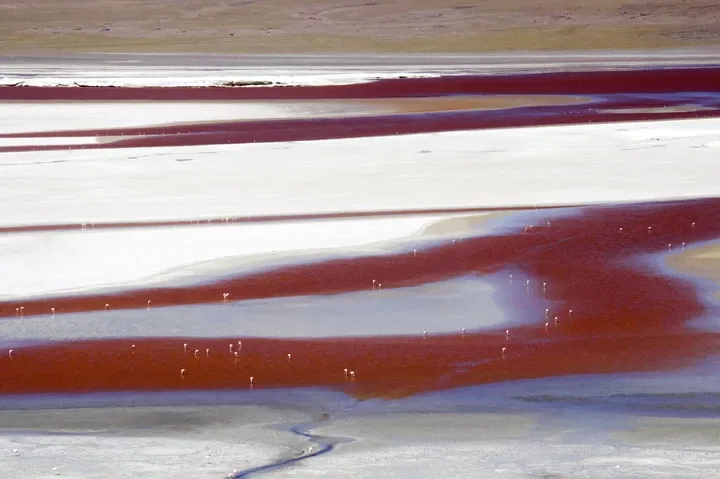
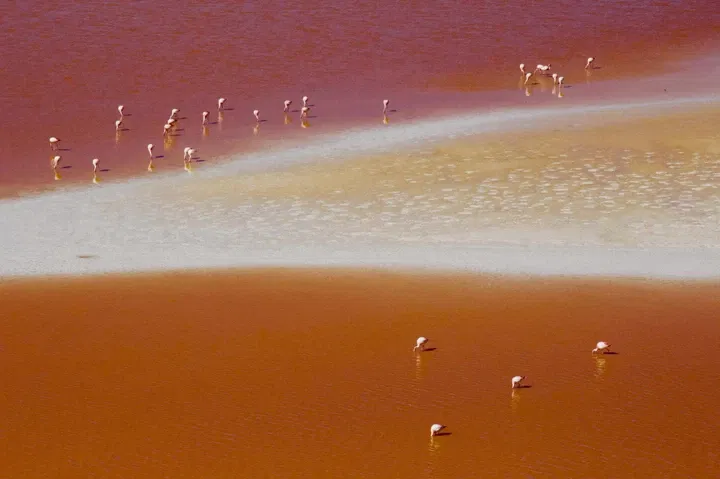
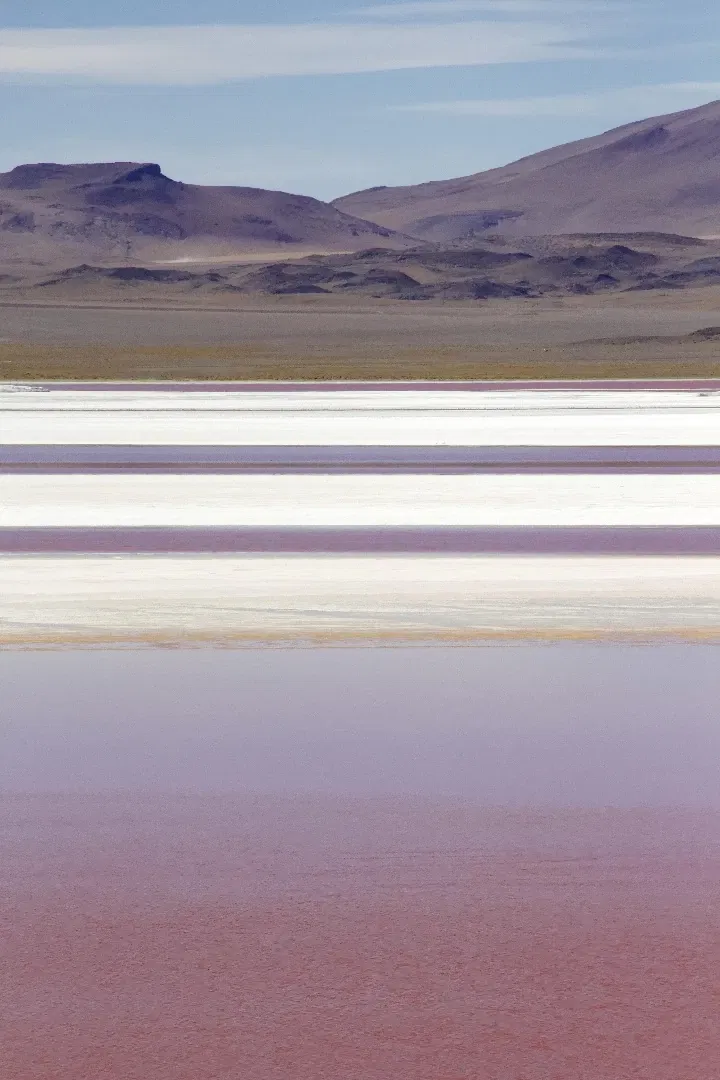
Red Laguna reveals a nature of radical clarity: iron- and mineral-rich waters tint the lagoons deep red, the light is harsh and unyielding, and forms carve themselves sharply against the horizon. Yet Gerdts is not drawn to spectacle—she searches for structures, for a visual order, for moments where nature condenses into surface, color, and form.
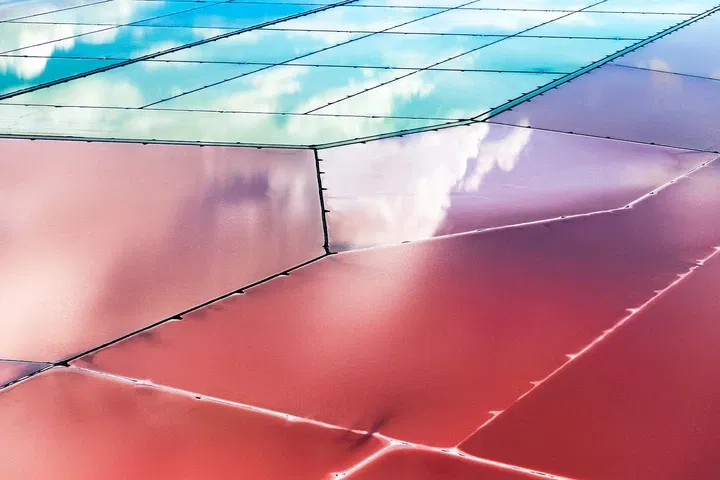
Her works are created with analog precision within a digital medium: Gerdts photographs directly, without manipulation, guided by a clear, formal sensitivity. She selects framings where landscapes dissolve into abstract planes. Viewing becomes an experience poised between fascination and contemplation.
Influenced by modern painters such as Kandinsky and Rothko, Gerdts approaches photography with a painter’s instinct—thinking in layers, directions, and tensions. The color fields of the lagoons, shifting from vermilion to ochre depending on the light, unfold across her images like oil or acrylic on canvas. Chilean flamingos weave gently through the series—appearing as ornamental cadences, seemingly incidental yet rhythmically set. They serve as quiet reminders that these compositions are not the product of artistic invention, but of attentive observation and lived encounter.
The series was created during a multi-day expedition through the Reserva Nacional de Fauna Andina Eduardo Abaroa, a region of extraordinary beauty—and acute fragility. The vivid coloration of the water, surreal as it appears, is a chemical reality: a balance increasingly endangered by climate change and resource extraction.
Red Laguna is both an act of recording and an act of homage—to the beauty and vulnerability of nature, and to its innate capacity for abstraction. Gerdts’ images are quiet, precise, and open-ended: they reveal not only what is, but what can be seen when perception shifts. What remains, in turning away from the literal, is not recognition—but pure seeing.