New
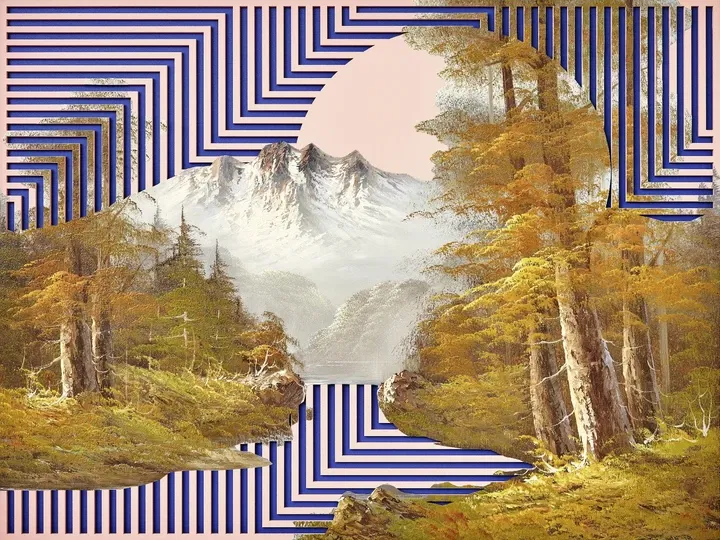
The Night All Time Broke Out
from £ 699
3 sizes available
Unfortunately, this artwork cannot be added to the room view.


Born in Akureyri, Northern Iceland, in 1974, Baldvin Ringsted has developed an artistic language at the intersection of sound and image. Shaped by a youth immersed in the DIY punk and metal scene, he… Read more
Bio Exhibitions Interview
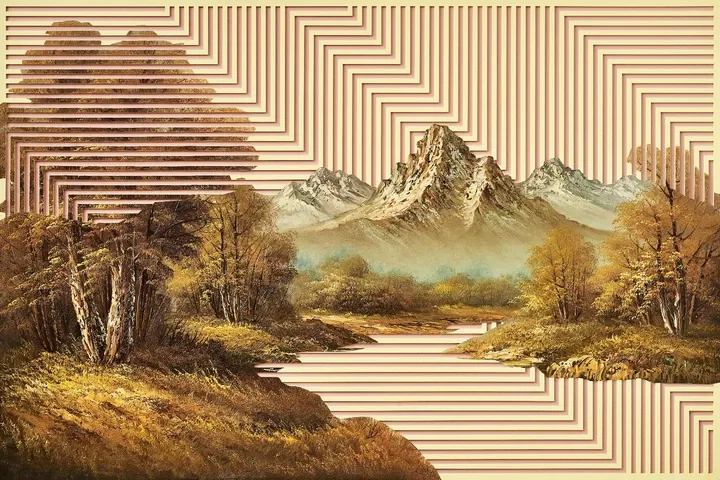
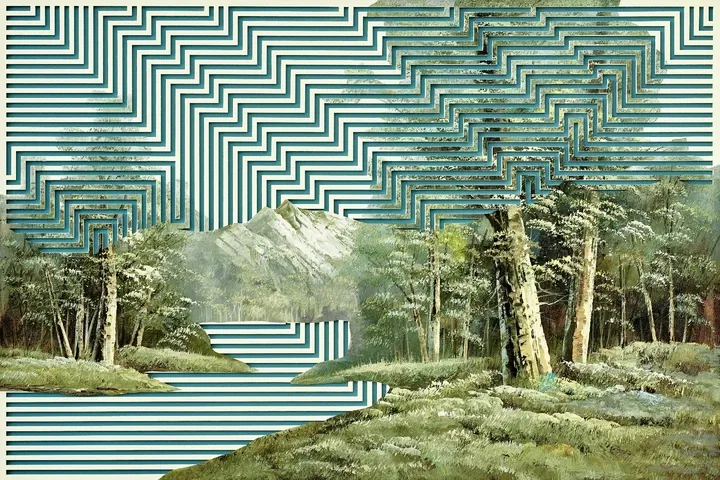
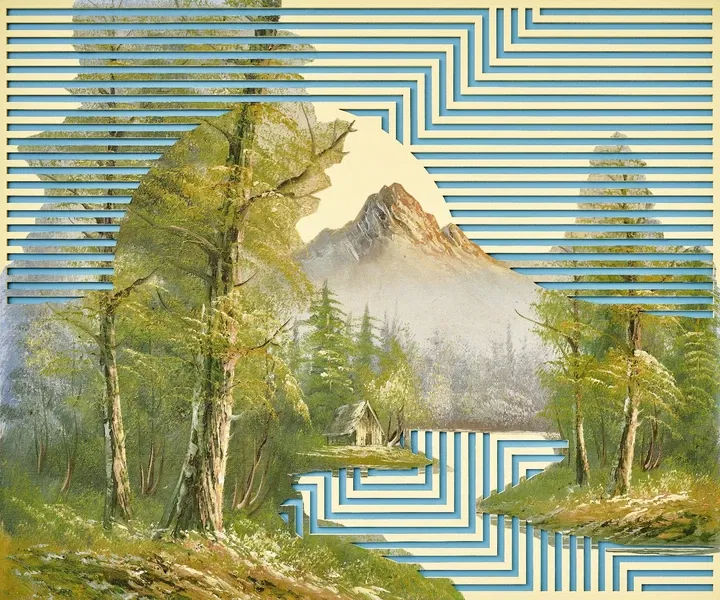
Born in Akureyri, Northern Iceland, in 1974, Baldvin Ringsted has developed an artistic language at the intersection of sound and image. Shaped by a youth immersed in the DIY punk and metal scene, he began early on to translate sound into visuals—album covers into memory objects, audio into visual energy. At the same time, Iceland’s rugged landscape lingers as a grounding counterpoint—adding structure and seriousness to his work. This dynamic tension still defines his art: paintings, collages, sculptures, and installations that weave together sound, memory, and pop culture.
A central theme is auditory memory: how sound embeds itself in us, evokes images, and how those images open sonic spaces. Ringsted renders this experience into a visual language that is both structured and open. While his works follow precise sketches, the process leaves room for interference and improvisation—like a musical composition that is orchestrated but never over-controlled.
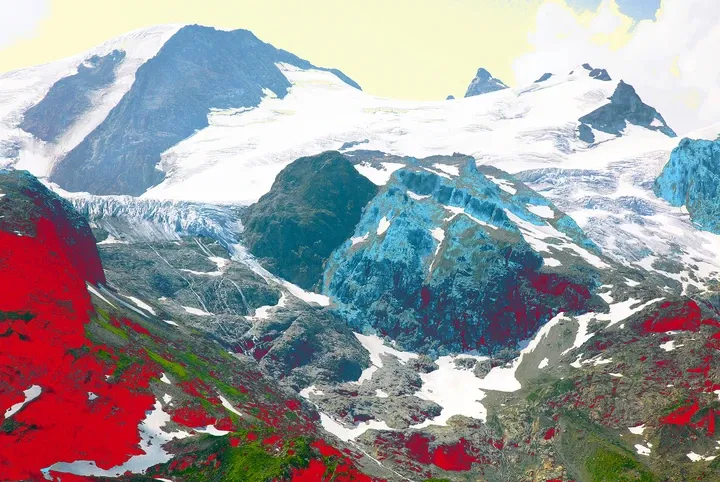
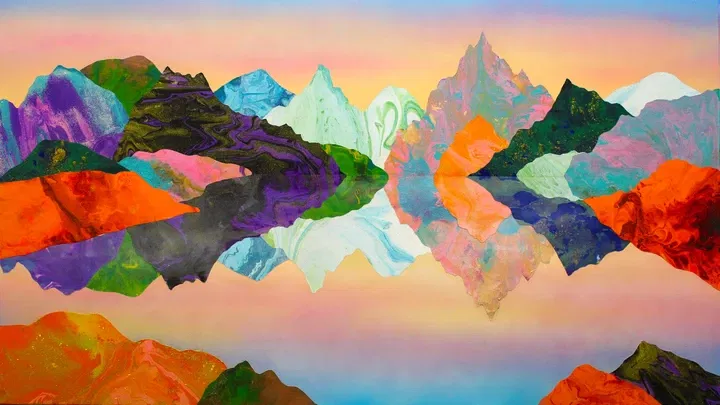
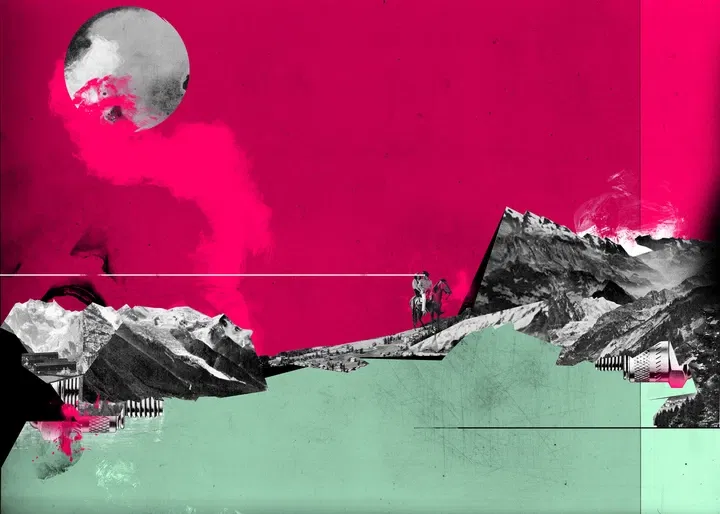
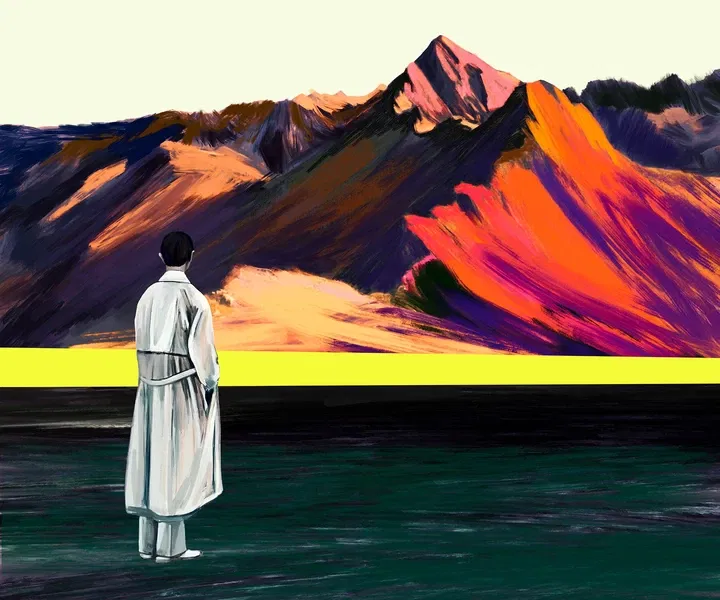
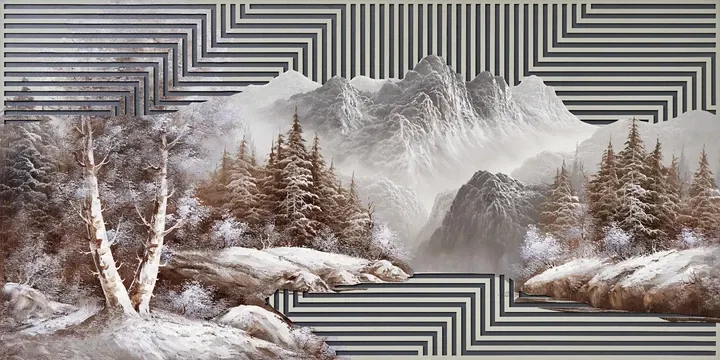
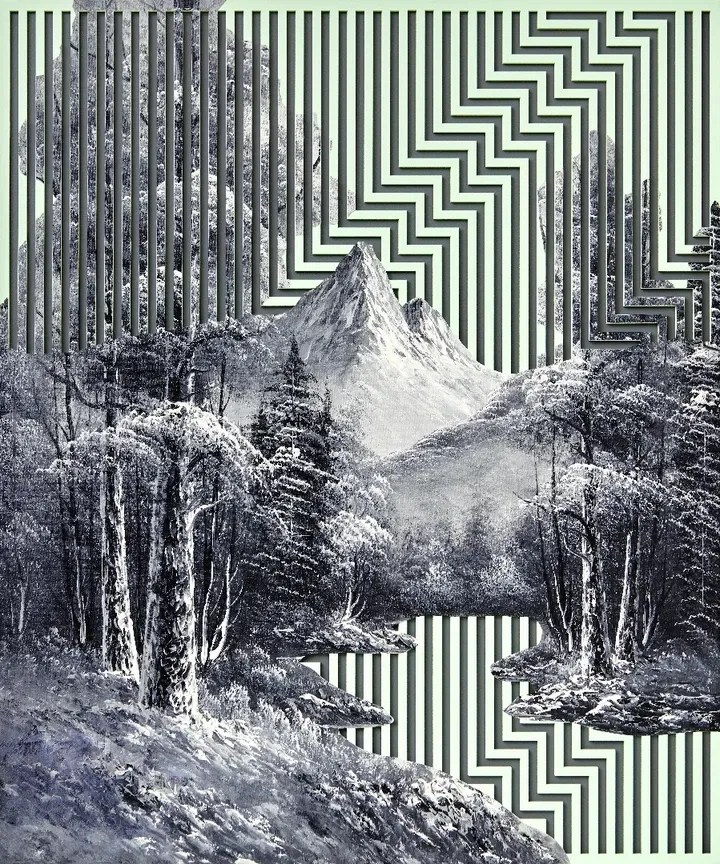
His paintings often draw on nostalgic landscape prints—decorative finds from the 1970s, which he reactivates with new meaning: reworked, painted over, cut up, or infused with new patterns. Landscape becomes more than scenery—it becomes a resonant space, echoing memories, pop culture, and personal as well as collective history.
His mixed-media works thrive on contrast: ornamental motifs meet traditional landscape; chance encounters meet precision painting; punk attitude meets artisanal finesse. The results are pieces that at first glance are aesthetically compelling, but on second glance reveal deeper layers—a dialogue between surface and significance.
A graduate of the Glasgow School of Art (MFA 2007), Ringsted lives and works in Scotland. His work has been exhibited internationally—in New York, London, Glasgow, and at the Akureyri Museum of Art. In 2025, he took part in the Royal Academy Summer Shows and received honors at the Scottish Landscape Awards.
His practice moves between memory and transformation, echo and image. Baldvin Ringsted creates art that is meant to be seen, heard, felt, and remembered—a bridge between sound and vision, between past and present.
2023 Random Access Memory, Stallan-Brand, Glasgow
2020 Rhythm Distortions, SWG3 Gallery, Glasgow
2016 The Decline of Western Civilisation, The Hidden Noise Gallery-for Glasgow International
2016 Bárujársárin, Akureyri Museum of Art
2012 Baldvin Ringsted, New work, MYU gallery, Glasgow
2012 In Praise of The Morning Star, Arch One, Glasgow
2010 B.P.M., Martos Gallery, Chelsea New York
2010 Low Growl, SWG3 (Glasgow International)
2025 Royal Academy Summer Show
2025 Crown Court Gallery, London
2025 Rise Art & Glenfiddich Whiskey Exhibition, London
2024 Royal Academy Summer Show
2024 Process, Edinburgh
2023 Afmæli, Akureyri Museum of Art, Iceland
2019 VOR, Akureyri Museum of Art, Iceland
2018 Artists who make music Musicians who make art, QPRC, Glasgow
2016 Oscilloscope, Old Hairdressers, Glasgow
2014 Voidoid Archive space (Glasgow International)
2012 Global-Lokal, Akureyri Museum of Art
2012 Sublime(screening), Inverness
2010 Mixtapes: Popular Music in Contemporary Art, Glucksman Gallery, Cork, Ireland
2010 Oops Apocalypse, Occupy Space, Limerick Ireland
2010 Meet me at the bottom of the pool, Martos Gallery, New York