


- Displacements
- Introduction
- CV
- Exhibitions
- Publications
- Links
Into the Virtual Stadium!
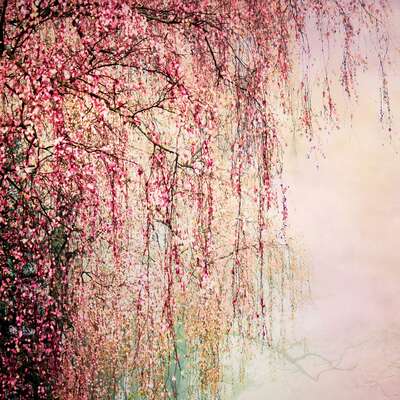
The cloud of an explosion fills the entire space. It is decorative, it is undefinable and it is pink. Are they detonating the Palace of the Republic as they once did the City Palace? Are we at war or maybe just in Hollywood again? We’ll never find out because we have nothing more than this pink cloud which would possibly lift and uncover something hidden if it weren’t a photograph. But it is a photograph and thus what’s behind it will remain a mystery.
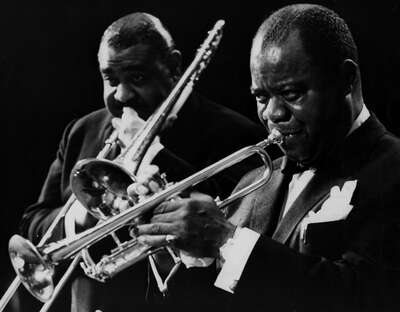
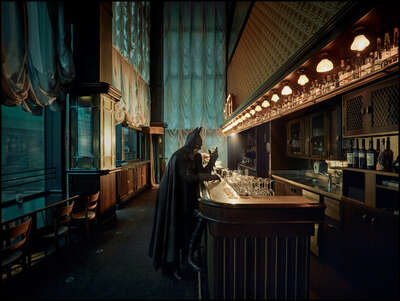
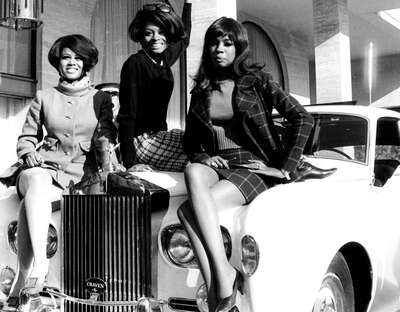
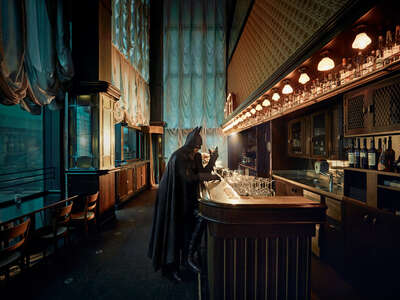
Perhaps it’s a sign of the over-saturation with pictures that a set of younger photographers come to adopt and “re-educate” photos that are already available instead of bringing more of their own into the world. Thomas Neumann belongs to these photo-recycling artists. “Depicting the world in order to then show the pictures in other places is to me journalistically interesting at most, but otherwise it’s too little for me. It’s not enough to satisfy the desire to express myself. Therefore his subjects do not originate by any means from reality, but from the world of magazine and newspaper images. When browsing through the magazines, his interest is especially drawn to the media’s established cliché images, which remain entirely interchangeable and whose information content is downright dubious. Neumann, who studied under Thomas Ruff at the Düsseldorf Art Academy, hurls into them with a definite randomness in which he robs them of their captions and throws the images back to stand alone. The third step is the processing. He doesn’t add any data, but dissects the picture into its layers of colors in order to alienate them. While he reverses the printing process, he also makes the handcrafted aspect of each bit of photographic information visible and in this manner also takes from the pictures the illusion of a possible authenticity.
Highlights in Memory
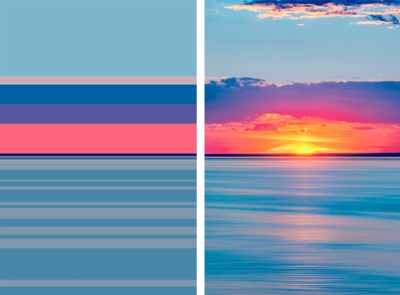
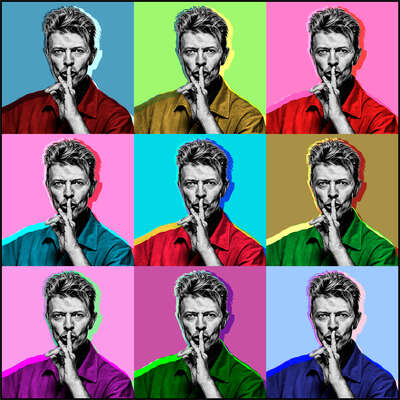
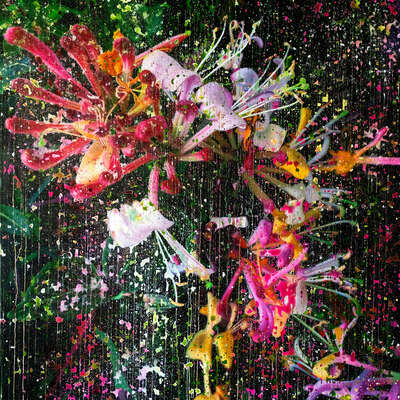
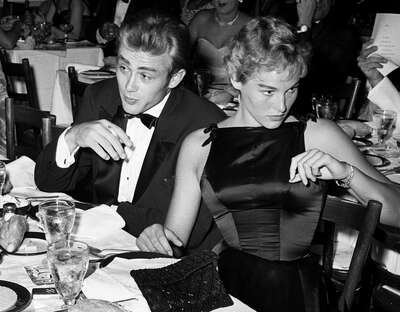
Every detail of the extracted films that makes up the photo can now be further processed. Pixelation, blurs, grating or color separation – the possibility for manipulation is endless. When recomposing Neumann puts the layers back slightly in opposition to one another and achieves the “misprint” effect, which otherwise only comes about through the sloppy work of a printer. He contrasts the concrete with the vague, which certainly suits the medium of photography, because a documentary photograph always remains a snapshot which needs interpretation. Pictures stamp themselves like highlights into our memory, sometimes more or less spectacularly, but what they tell us remains uncertain. What does a crowd mean to me? It claims only itself and nothing beyond it. Is it a pop concert, a church holiday assembly or a demonstration? And if it’s a demonstration, what’s being demonstrated against? It’s not without emphasis that Thomas Neumann refers to this arbitrariness. Magazines are more or less wittily arranged piles of pictures in which war and fitness tips, and advertisements and VIPs appear next to each other with the same validity and are therefore neutralized. Neumann puts himself up to the challenge to gain new attention for these devalued masses.
Against the Masses
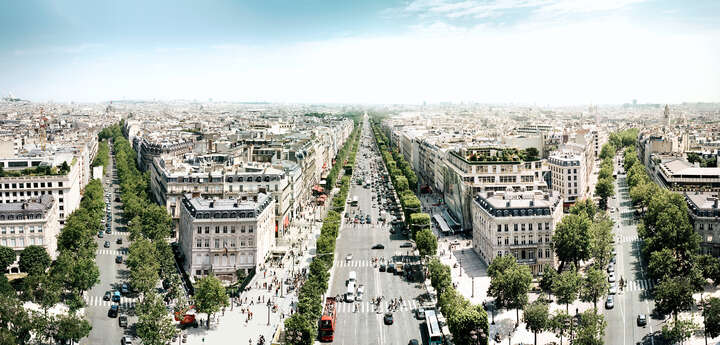
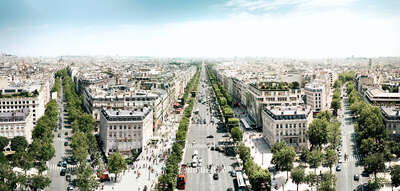
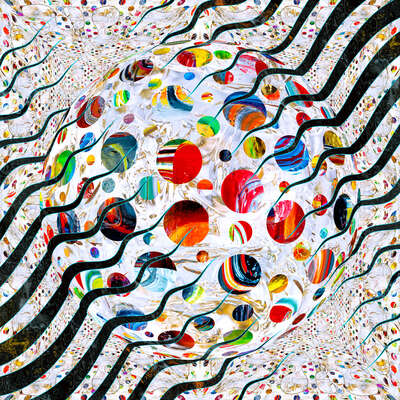
Even his stadium isn’t that which it pretends to be. It appears as an aerial shot of a sport complex but in truth it’s nothing other than a simulation that purports to reproduce a (future) reality. Such newspaper pictures have long had nothing to do with documentation (from the Latin docere = to teach); they aim much more to camouflage and deceive. As Neumann uploads and separates the colors, he frees them from their original informative task, at which they failed so miserably. The only thing that he adopts from the world of magazines is the picture selection that’s as random as the colorful world of mass media. When everything is equally valid, then everything can exhibit a formal charm. Neumann continues to go further. If it was once already seen on a photograph, it hardly appears to interest him anymore. Everything is beautiful. Or to put it better: everything has the same potential for aesthetic efficiency.
The company headquarters stands next to the figure skater, a body of water next to the fire-fighting operations of a fire brigade. Neumann expertly plays with the red herrings of media criticism without getting wound up in them. Always lurking in the background of his work is an uneasiness with the inflation of actual photo production. He shares this discomfort with other Ruff students, such as Natalie Czech and Pablo Zuleta Zahr, who have nevertheless found totally different answers to the elementary question regarding the steadily growing picture consumption and its consequences. What applies to all three artists – independent of all commentary on societal developments – is the rejection of pure conceptualism. They never lose sight of the sensual, the effects and surprises. Thomas Neumann develops a nearly sarcastic undertone when he uses the visual bla-bla-bla of photojournalism – counterpart to the talk show platitudes à la Sabine Christiansen [a German politically-oriented talk show host] – as formless raw material. If suited for nothing else, these photos are the ideal basis for an aesthetic recharge.
Dr. Boris von Brauchitsch