Introduction
Microcosm or macrocosm?
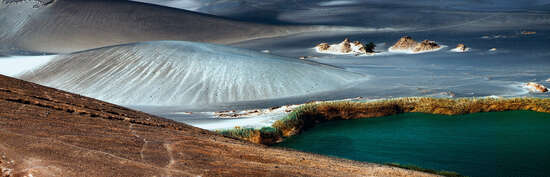
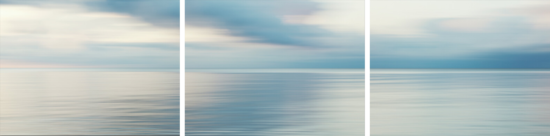
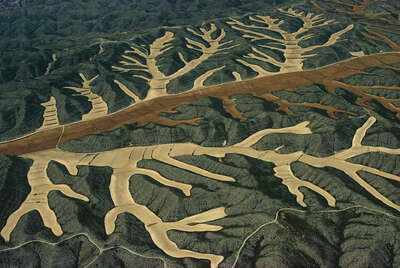
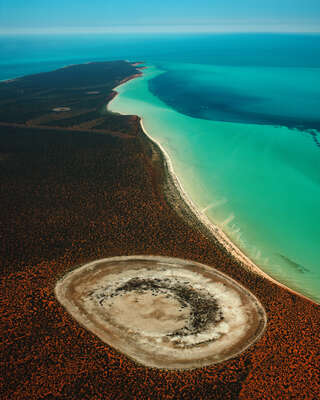
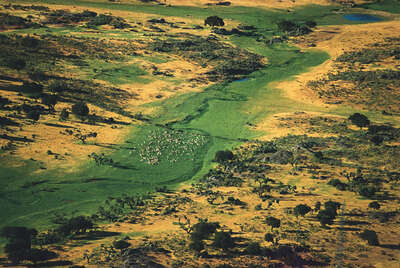
Klaus D. Francke photographs the world from above; his images reveal our “blue planet” as an endless expanse of colors and shapes, a mysterious work of art born of a sparkling, supernatural imagination.
Francke, co-founder of the Bilderberg Agency in Hamburg, works for renowned magazines such as Geo, Stern, and Merian and has garnered numerous accolades for his work. For over twenty years he has regularly boarded a Cessna 172 to photograph the world from 300–1,500 meters above. Three monographs have already been published, revealing spectacular views of Ireland, Iceland, and the entire world from a bird’s-eye view. The Frankfurter Allgemeine Zeitung praised his images as “dreamscapes of an abstract art that not earth herself but rather photo artist Klaus D. Francke created, as the title of the book suggests.”
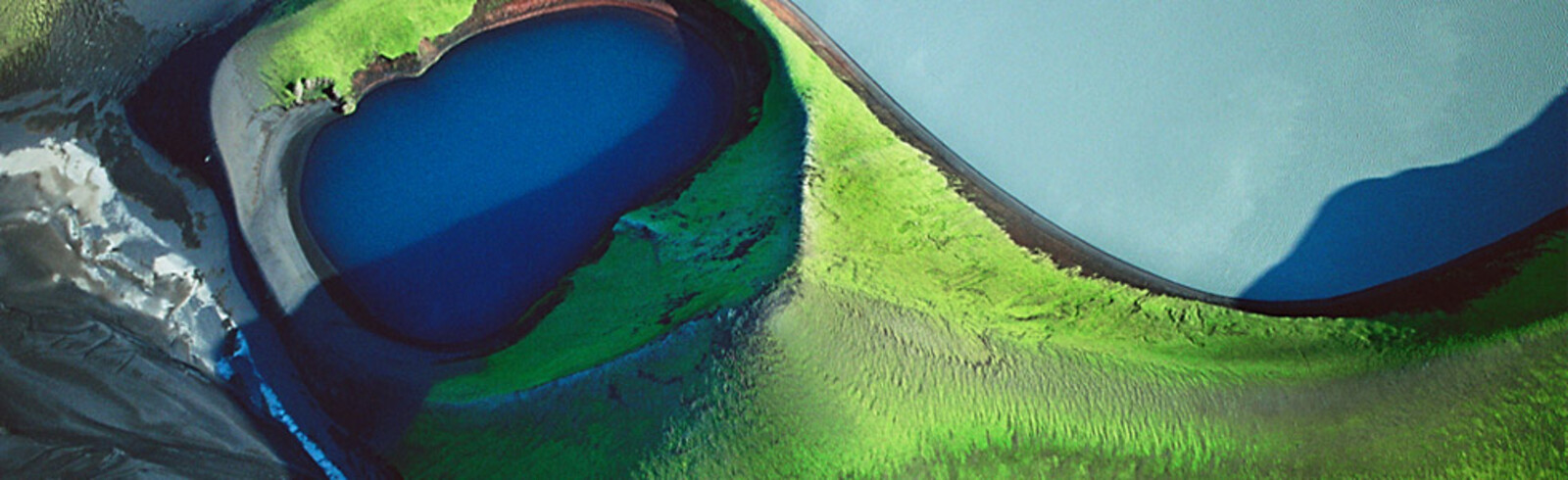
Our fascination with the bird’s-eye view is made palpable in Francke’s images; even as observers we feel as though we are floating in mid air alongside the photographer. A small fishing lake in Iceland, where from a closer distance we would see the trout jumping on the surface, becomes a gorgeous puzzle: organic structures transform themselves into a masterfully composed work of art that both reflects the mysteries of nature and simultaneously the seemingly manmade nature of it all.
Our fascination with Francke’s images lies in this formal ambiguity, not to mention in their enormous wealth of colors, which Alexander Smoltczyk describes in the introduction of Kunstwerk Erde: “We recognize Van Gogh’s palette, Monet’s lighting effects, the poppy and wheat of turn-of-the-century Argenteuil. We effortlessly find the color cosmos without matte shadow tones, the world of the early impressionists, in the cobalt blue, emerald green, chrome yellow, vermillion, ocher, ultramarine, Naples yellow.”
Bio
| 1935 | Born in Hamburg, Germany |
| Since 1998 | Air Photographer |
| Lives and works in Hamburg, Germany |
| 2012 | Died |

 No thanks, I would like to stay on this site.
 Yes, I would like to switch.